
GPS Tracking for Healthcare Fleets- Ambulances, Medical Deliveries & Compliance
Healthcare fleets operate under pressure where every second matters. From emergency response to time-sensitive medical deliveries, even minor inefficiencies can create serious consequences. This is where GPS tracking for fleets becomes essential, acting as the operational backbone of modern healthcare fleet management.
Without real-time visibility, hospitals and EMS providers face delays, routing inefficiencies, and compliance risks. A well-implemented GPS fleet tracking solution ensures that vehicles are monitored continuously, routes are optimized, and operations remain accountable. In today’s environment, GPS tracking is not just a logistics tool-it is a critical system supporting patient outcomes, safety, and regulatory readiness.
What Is GPS Fleet Tracking in Healthcare?
GPS fleet tracking, which uses satellite technology to monitor vehicle location in real time.
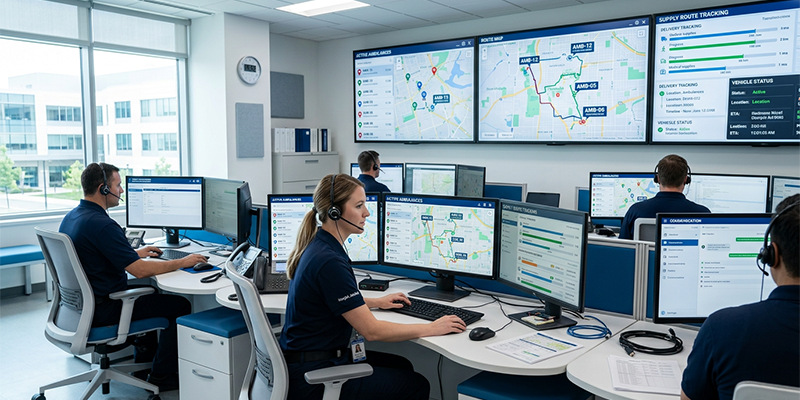
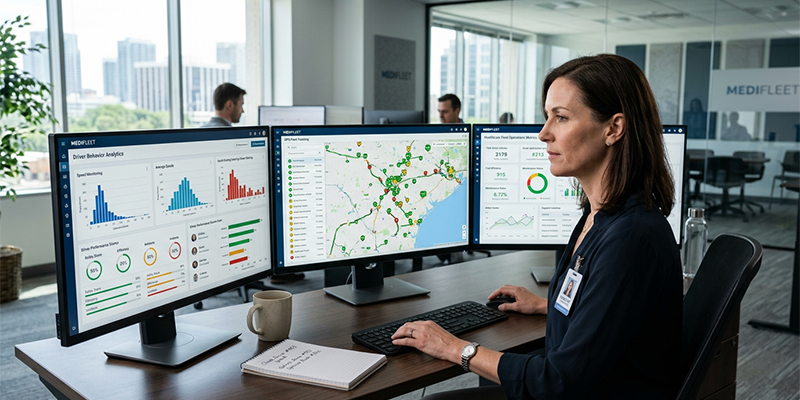
In healthcare, this system serves as a centralized vehicle tracking system that connects ambulances, delivery vans, and support vehicles to a live dashboard. Fleet managers can instantly see vehicle positions, routes, and activity status.
How it works-
- GPS devices installed in vehicles collect location data
- Data is transmitted to cloud-based platforms.
- Operations teams access insights via dashboards.
There are two types of GPS: real-time (active) and passive. In healthcare environments, real-time tracking is most common because it enables immediate decision-making.
Unlike traditional dispatch systems, GPS fleet tracking provides continuous visibility across all vehicles, allowing healthcare teams to act faster and with greater accuracy.
Why Healthcare Fleets Need GPS Tracking
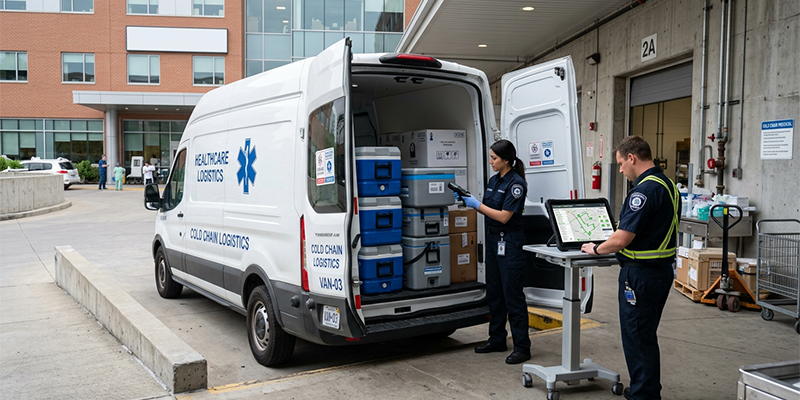
Healthcare fleets operate differently from standard logistics fleets. Delays don’t just impact efficiency-they affect patient care. The benefits of GPS vehicle tracking system for healthcare is listed as follows-
Faster Emergency Response
Ambulances can be dispatched based on proximity rather than assumption. With real-time location data, dispatch teams can instantly identify the closest available unit, rather than relying on static assignments. This reduces delays caused by miscommunication or outdated information. Integrated traffic insights further improve routing, helping ambulances avoid congestion and reach patients faster when response time is critical.
Improved Operational Efficiency
Routes are optimized automatically, reducing idle time and fuel costs. GPS enabled systems continuously analyze traffic patterns, road conditions, and vehicle availability to assign the most efficient routes. This minimizes unnecessary mileage and idle time across the fleet. Over time, these improvements lead to better resource utilization, lower fuel consumption, and smoother coordination between dispatch teams and field operations.
Better Visibility
Fleet managers gain real-time insights into all vehicles. A centralized dashboard provides a live view of vehicle locations, status, and movement history. This allows managers to monitor operations without relying on manual updates or driver calls. Real-time visibility also helps identify delays, inefficiencies, or unexpected stops, enabling quicker decisions and better overall control of healthcare fleet activities.
Reduced Errors
Manual tracking methods are replaced with accurate, automated data.
The broader benefits of GPS vehicle tracking also include-
- Lower operational costs
- Better asset utilization
- Increased accountability
GPS tracking can reduce response times by up to 20–30% in urban environments, making it a critical investment for hospitals and EMS providers.
Ambulance Tracking- Saving Critical Minutes
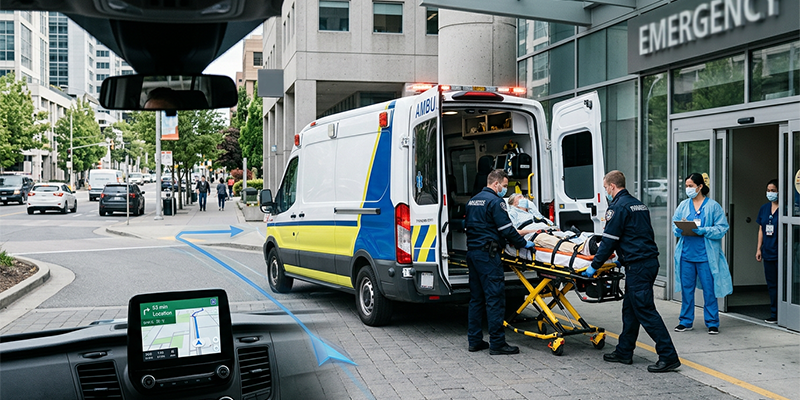
Ambulance tracking ensures the nearest vehicle is dispatched immediately during emergencies.
With ambulance tracking, dispatch teams can-
- Identify the closest available ambulance.
- Monitor real-time traffic conditions.
- Adjust routes dynamically
An advanced ambulance tracker provides-
- Live location updates
- Estimated arrival times
- Status tracking (available, en route, busy)
This improves coordination between hospitals and field teams.
Operational insight-
Real-time tracking reduces decision delays and helps avoid congestion, directly impacting patient survival rates in emergencies.
By integrating GPS tracking for fleets, emergency services can operate with precision instead of guesswork.
GPS Tracking for Medical Deliveries
Healthcare logistics includes more than ambulances. Medical deliveries require strict timing and handling.
Using delivery tracking software, healthcare providers can manage-
- Vaccine transportation
- Blood and organ deliveries
- Medical equipment distribution
These deliveries often depend on temperature control and strict timelines. GPS tracking ensures-
- Route compliance
- Delay alerts
- Real-time visibility
For example, if a delay occurs, fleet managers can reroute immediately to prevent loss of critical supplies.
A reliable vehicle tracking system helps maintain cold chain integrity and ensures accountability throughout the delivery process.
Driver Behavior Monitoring & Safety
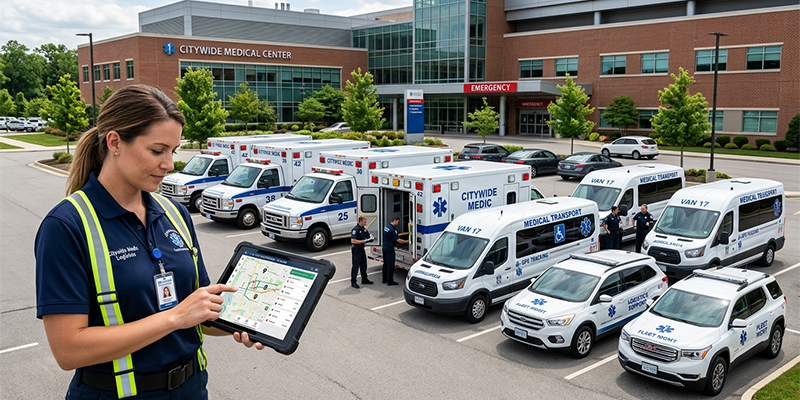
Safety is a major concern in healthcare fleet operations. Poor driving habits can lead to accidents, delays, and compliance issues.
Driver behavior monitoring tracks-
- Speeding
- Harsh braking
- Rapid acceleration
- Idling time
This data helps fleet managers recognize risky patterns and take corrective action.
Operational insight-
Driver behavior monitoring helps identify unsafe driving patterns before they lead to incidents.
Benefits include-
- Reduced accident rates
- Lower insurance costs
- Improved driver accountability
In high-stakes environments like healthcare, safer driving directly contributes to better service delivery.
Compliance & Reporting in Healthcare Fleets
Healthcare fleets must meet strict regulatory standards. Tracking systems play a key role in maintaining compliance.
With GPS fleet tracking, organizations can maintain-
- Route history logs
- Time-stamped delivery records
- Driver activity reports
These records support audits and ensure transparency.
Compliance benefits-
- Accurate documentation for inspections
- Reduced risk of regulatory penalties
- Better accountability across operations
A structured healthcare fleet management approach supported by tracking systems ensures that all operational data is recorded and accessible when needed.
Choosing the Best Fleet GPS Tracking Systems
Selecting the best fleet GPS tracking systems requires evaluating features that match healthcare needs.
Key features to look for-
Real-time Tracking Dashboard
A centralized dashboard displays live vehicle locations, statuses, and movement history. Fleet managers can monitor operations in real time, identify delays, and make quick decisions without relying on manual updates or driver communication.
Route Optimization Tools
These tools analyze traffic, road conditions, and vehicle availability to determine the most efficient routes. They reduce travel time, fuel usage, and unnecessary detours, ensuring faster deliveries and improved overall fleet productivity.
Alerts and Notifications
Automated alerts notify managers about delays, route deviations, speeding, or unauthorized stops. These real-time updates allow quick corrective action, helping maintain operational control and ensuring compliance with healthcare logistics requirements.
Integration with Dispatch Systems
Seamless integration connects tracking data with dispatch platforms, enabling faster decision-making. Dispatch teams can assign vehicles based on real-time availability, improving coordination between operations centers and field units without manual intervention.
Driver Performance Analytics
This feature tracks driving behavior, including speed, braking, and idling patterns. It helps identify inefficiencies and risky habits, allowing managers to improve driver safety, reduce costs, and maintain consistent service standards across the fleet.
Scalability is also important. Healthcare organizations often expand operations, so the system must adapt without disruption.
Companies like Tracker Systems focus on delivering reliable tracking solutions that support real-time fleet visibility and operational control.
Unlike generic solutions, healthcare-focused systems must handle emergency response workflows and sensitive delivery requirements.
Types of GPS Tracking Used in Healthcare
There are different types of GPS tracking used in healthcare fleets-
Active (Real-Time) GPS
Active GPS systems transmit live location data at regular intervals, allowing fleet managers to monitor vehicles in real time. This is essential for emergency response, where instant visibility helps dispatch the nearest unit quickly. It also enables dynamic route adjustments based on traffic, ensuring faster and more reliable service delivery.
Passive GPS
Passive GPS systems record vehicle location and movement data internally, which can be accessed later for review. This type is useful for analyzing route history, driver performance, and operational patterns. While it does not provide live updates, it supports detailed reporting, audits, and long-term performance improvement strategies.
Hybrid Systems
Hybrid GPS systems offer the benefits of both active and passive tracking, providing live updates alongside stored historical data. This allows fleet managers to make real-time decisions while also reviewing past performance. In healthcare fleets, hybrid systems help balance immediate response needs with compliance, reporting, and operational analysis requirements.
Healthcare fleets primarily rely on real-time systems to achieve immediate visibility and rapid decision-making.
Wrapping Up
Healthcare fleet operations demand accuracy, speed, and accountability. From emergency response to medical deliveries, GPS tracking for fleets provides the visibility needed to manage complex logistics effectively.
By implementing GPS fleet tracking, healthcare organizations can improve response times, uplift safety, and maintain compliance with confidence. Whether it’s through ambulance tracking, delivery optimization, or driver behavior monitoring, the impact is measurable across every part of the operation.
For organizations looking to strengthen their healthcare fleet management, adopting a reliable tracking system is no longer optional-it’s essential to delivering consistent, timely care.
FAQs
1. How does GPS tracking improve ambulance response times?
GPS tracking improves ambulance response times by providing dispatch teams with real-time vehicle location and status updates. This allows them to instantly identify and assign the nearest available ambulance. Integrated traffic data helps avoid congestion and delays, ensuring faster routes. Overall, it reduces decision time and improves coordination between dispatchers and emergency responders.
2. What features should a healthcare fleet tracking system include?
A healthcare fleet tracking system should include real-time tracking, route optimization, alerts and notifications, reporting tools, and driver monitoring. Integration with dispatch systems is also important for smooth coordination. These features help improve efficiency, ensure compliance, improve safety, and provide full visibility into fleet operations for better decision-making and control.
3. Is GPS fleet tracking compliant with healthcare regulations?
GPS fleet tracking is compliant with healthcare regulations when it focuses on operational data such as vehicle location and activity. It does not collect or store patient information, which avoids privacy concerns. Most systems are designed to meet data security standards, ensuring that tracking supports compliance without violating healthcare data protection requirements.
4. Can GPS tracking be used for medical delivery vehicles?
GPS tracking is widely used for medical delivery vehicles transporting vaccines, blood, and equipment. It ensures real-time visibility, allowing managers to monitor routes and delivery progress. Alerts help identify delays or deviations quickly. This level of tracking supports timely deliveries, maintains accountability, and helps ensure sensitive medical supplies reach their destination safely.
5. How does driver behavior monitoring improve safety in healthcare fleets?
Driver behavior monitoring improves safety by tracking actions such as speeding, abrupt braking, and rapid acceleration. These insights help identify risky driving patterns early. Fleet managers can provide training or corrective actions to drivers to reduce accidents. Over time, this leads to safer operations, lower insurance costs, and more reliable service delivery.
6. How is real-time and passive GPS tracking different?
Real-time GPS tracking provides continuous location updates, allowing immediate monitoring and quick decision-making. Passive GPS tracking stores vehicle data internally, which can be accessed later for analysis and reporting. Healthcare fleets usually prefer real-time tracking because it supports faster response, while passive systems are mainly used for reviewing past performance.
7. Are ambulance tracking systems expensive to implement?
Ambulance tracking systems vary in cost depending on features and fleet size. While initial investment may seem high, the long-term benefits often outweigh the expense. Improved response times, reduced fuel consumption, and better resource utilization contribute to strong return on investment, making these systems cost-effective for healthcare operations.
8. How secure is GPS tracking data for healthcare fleets?
GPS tracking data is generally secured through encrypted cloud platforms and controlled access systems. Only authorized personnel will be able to manage the data. Modern solutions also include security protocols to prevent unauthorized access or breaches. This ensures that operational data remains protected while supporting safe and compliant fleet management practices.
9. What are the benefits of GPS tracking for fleets in healthcare logistics?
GPS tracking improves visibility across all vehicles, reduces delays through optimized routing, and uplifts safety with better monitoring. It also supports compliance by maintaining accurate logs and reports. These benefits help healthcare organizations manage operations efficiently, ensure timely service delivery, and maintain higher standards of accountability and performance.
Recent Posts
-

How GPS Tracking Helps Businesses Meet Fleet Compliance and Regulatory Requirements
One missed 30-minute break. One unlogged mile. That is sometimes all it takes to trigger a roadside …Oct 12th 2026 -

Calculating the ROI of GPS Fleet Tracking for Your Business
Every GPS tracking vendor will tell you that their product pays for itself. Search around, and you w …Oct 5th 2026 -

How GPS Tracking Helps Electrical Contractors Manage Multiple Crews
An electrical contractor running four crews across four job sites is effectively managing four separ …Sep 28th 2026