
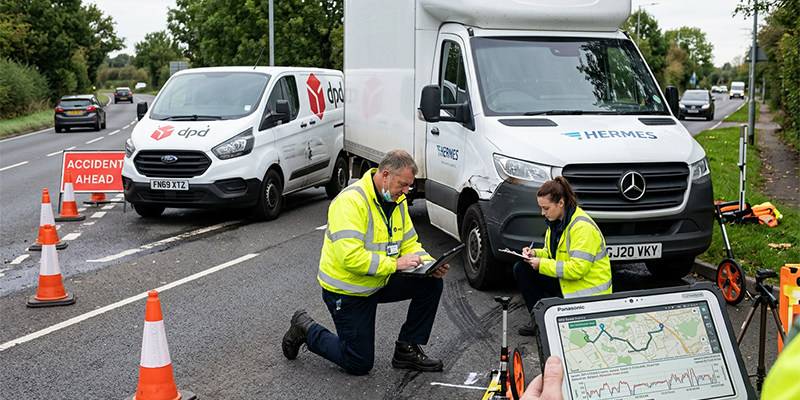
What Happens After a Fleet Accident? How GPS & Video Data Help Investigations
Fleet accidents can create more than vehicle damage. They can lead to driver disputes, delivery delays, insurance claims, legal issues, cargo problems, and lost customer trust. For fleet managers, the hardest part is often not knowing exactly what happened in the minutes before and after the crash.
Traditional accident investigation often depends on driver statements, eyewitness accounts, police reports, and photos from the scene. These sources are useful, but they can also be incomplete or conflicting. A driver may remember the event differently under stress. A witness may only see part of the incident. A report may not capture speed, route history, or driver activity in full detail.
This is where GPS fleet tracking and video telematics change the process. Modern fleet safety solutions give fleet teams objective data that helps reconstruct incidents faster. Instead of relying solely on memory, managers can review GPS records, dashcam footage, speed history, and driver activity. For companies that operate commercial vehicles every day, this evidence can support fair decisions, protect drivers, and reduce uncertainty after an accident investigation.
Why Fleet Accident Investigations Are More Complex Than Standard Vehicle Accidents
A vehicle accident investigation involving a commercial fleet is usually more complex than one involving a personal vehicle. There are more stakeholders, more business risks, and more records to review. A single incident may involve the driver, fleet manager, safety director, insurance provider, customer, cargo owner, legal team, and sometimes regulatory authorities.
Commercial liability is also different. A company vehicle represents the business, so the investigation must answer more than who hit whom. It may need to show whether the driver followed the assigned route, stayed within speed limits, complied with safety policies, or operated the vehicle during approved work hours.
Commercial vehicle tracking helps fleet teams answer these questions with a clearer record of movement and activity. Instead of depending only on a written report, managers can review where the vehicle was, how fast it was moving, and what happened before the crash.
Driver safety monitoring also plays an important role, as accidents are often linked to behavioral patterns. Speeding, harsh braking, distraction, fatigue, and aggressive driving may not be clear in a basic report, but they may be evident in fleet data. That makes the investigation more complete and helps the business decide what to do next.
What Data Is Collected Immediately After a Fleet Accident?
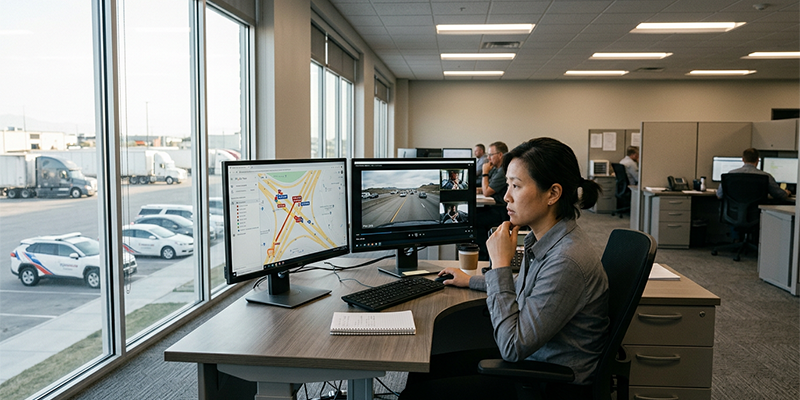
After a fleet accident, the most useful information is usually the data that captures the event as it happened. A GPS tracking system records vehicle location, speed, route history, and driving activity in real time, allowing fleet managers to reconstruct events before, during, and after an accident.
This data may include timestamps, route replay, speed changes, stop duration, ignition status, and driver activity. In some cases, engine diagnostics may also help show whether there was a vehicle issue before the crash. If fleet dash cams are installed, footage can show road conditions, traffic flow, driver response, and potential external factors.
Dash cam evidence is especially useful because it provides visual context that GPS data alone cannot. GPS may show that a vehicle slowed suddenly, but video can show whether another vehicle cut across the lane, a pedestrian stepped into the road, or the driver was distracted.
Driver behavior monitoring alerts may also be reviewed. These alerts can include harsh braking, sharp cornering, rapid acceleration, speeding, or phone distraction. When combined, the data creates a fuller picture of the incident.
For fleet managers, the goal is not just to collect information. The goal is to preserve the right evidence quickly, organize it clearly, and use it to support a fair accident investigation.
How GPS Fleet Tracking Helps Reconstruct the Accident Timeline
GPS fleet tracking helps managers build a timeline of what happened before, during, and after a crash. This is one of the most valuable parts of the investigation process because accidents often unfold in seconds, but the surrounding events may begin minutes earlier.
Route playback can show whether the vehicle followed the assigned path or took an unplanned route. Speed history can show whether the driver was traveling at a safe speed for the road conditions. Stop duration can confirm whether the vehicle had been parked, idling, loading, or waiting before the incident.
GPS tracking for fleets can also identify harsh braking, rapid acceleration, and unauthorized movement. For example, if a truck was involved in a collision near a jobsite, commercial vehicle tracking can help show when it entered the area, how long it stayed, and what route it took before the incident.
This is much stronger than depending only on eyewitness testimony. Unlike eyewitness accounts, GPS data provides timestamped and objective movement records. A witness may remember the general direction of a vehicle, but GPS records can show the exact route, activity, and timing.
It is also more reliable than manual reporting alone. A driver may submit a report after the accident, but automated telematics records can confirm or challenge that report with actual movement data. This helps fleet managers handle disputes more fairly and respond faster to insurance or customer questions.
For Tracker Systems, GPS fleet tracking is part of a larger evidence workflow. The real value comes from combining location records, vehicle activity, and safety data so fleet teams can know the full sequence of events.
The Role of Video Telematics and Fleet Dash Cams in Determining Fault
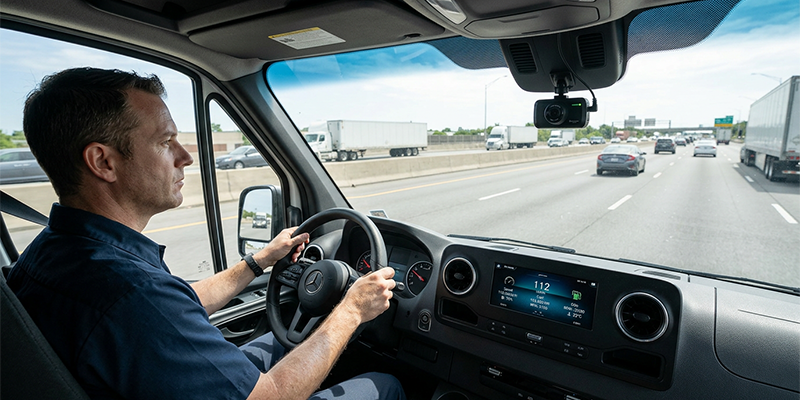
Video telematics combines vehicle cameras with GPS and telematics data to provide visual and operational evidence during fleet investigations. It helps answer one of the most important questions after a crash- what actually happened on the road?
Fleet dash cams may include forward-, driver-, side-, or rear-facing cameras. Forward-facing footage can show traffic signals, road hazards, lane position, sudden stops, and the actions of nearby vehicles. Driver-facing footage can show distraction, fatigue, seatbelt use, phone use, or whether the driver was alert at the time of the event.
Fleet camera systems can also use event-triggered recording. If a system detects harsh braking, sudden impact, sharp turning, or rapid acceleration, it may automatically save the footage around that moment. This matters because modern fleet camera systems can automatically store footage triggered by collisions within seconds of impact.
Dash cam evidence can help determine whether the fleet driver caused the incident, responded correctly to another driver’s mistake, or was not at fault. In many cases, video protects drivers from false claims. For example, another motorist may say a truck changed lanes unsafely, while the footage may show the truck stayed in its lane, and the other vehicle merged too closely.
Modern video telematics systems increasingly use AI-powered safety analytics to identify distracted driving, fatigue, and risky behavior in real time. This helps driver safety monitoring move beyond reviewing accidents after they happen. It can also help detect risky patterns before they lead to future incidents.
For fleets, video evidence adds clarity. GPS data shows movement. The video shows context. Together, they give safety teams a stronger foundation for decision-making.
How Driver Behavior Monitoring Reduces Future Accident Risks
An accident investigation should not end with deciding fault. It should also help prevent a similar incident from happening again. Driver behavior monitoring supports this by identifying patterns that may raise accident risk.
Common behaviors include speeding, harsh braking, rapid acceleration, hard cornering, distracted driving, fatigue, and repeated close-following events. These patterns may not always cause an accident right away, but they often signal where coaching is needed.
Driver safety monitoring gives managers a way to review trends rather than react only after a serious crash. For example, if one driver has repeated harsh braking alerts on the same route, the issue may involve driving habits, route conditions, traffic timing, or schedule pressure. The fleet team can then review the data and coach the driver with specific examples.
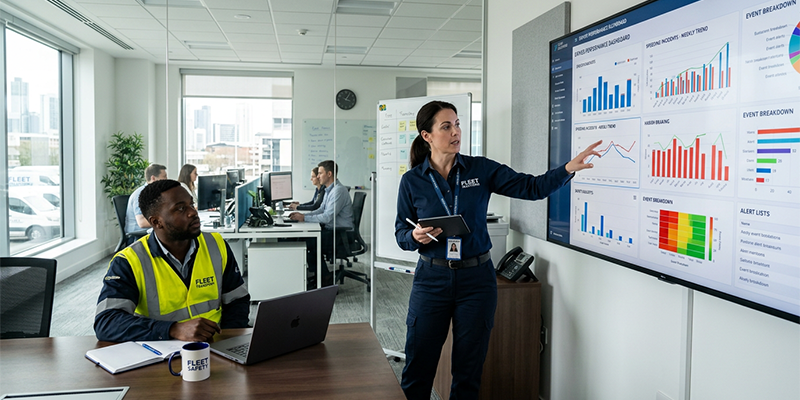
Fleet safety solutions can also use driver scorecards, safety reports, and event summaries to make coaching more consistent. The goal should not be punishment alone. The better approach is to use real data to help drivers know about risky habits and correct them before they lead to preventable accidents.
Tracker Systems’ fleet safety solutions support this type of risk management by helping businesses connect accident evidence with long-term driver safety trends.
How Fleet Data Helps Insurance and Legal Investigations
Insurance and legal reviews often need clear documentation. Without strong evidence, businesses may face longer claims processes, disputed liability, or unfair blame. Fleet data helps reduce these problems by giving managers records that are easier to verify.
During an accident investigation, GPS records can show location, movement, speed, and timing. Dash cam evidence can show what happened visually. Driver logs, alerts, and route history can help confirm whether the vehicle was being used properly.
This information can help defend against false claims. If another party says the fleet vehicle was speeding, telematics data can confirm the actual speed. If someone claims the driver ran a red light, footage may show whether that happened. If the driver says another vehicle caused the crash, video may support that statement.
In a vehicle accident investigation, consistent documentation is important. Evidence should be saved quickly, stored securely, and shared carefully with the right parties. Fleet teams should avoid relying on memory or incomplete reports when objective data is available.
By combining GPS fleet tracking, video records, and driver safety data, companies can respond with more confidence and reduce the confusion that often follows a crash.
Best Practices for Fleets After an Accident
After an accident, fleet teams should follow a clear process. A rushed or disorganized response can lead to missing footage, incomplete records, or conflicting reports.
First, preserve video telematics footage immediately. Event-based footage may be saved automatically, but managers should still confirm that the relevant clips are stored and protected from deletion.
Second, download GPS fleet tracking records for the time before, during, and after the crash. The timeline should include route history, speed, location, stop duration, and any alerts triggered near the event.
Third, secure driver statements while the event is still fresh. The driver’s report should be compared with GPS data and dash cam evidence, not treated as the only source.
Fourth, review telematics alerts such as speeding, harsh braking, rapid acceleration, or distracted driving events. These details can help explain the driver’s response and the conditions around the incident.
Fifth, create an investigation timeline. Investigators typically compare route history, speed data, and dash cam footage to reconstruct the sequence of events.
Finally, conduct a coaching review if driver behavior contributed to the incident. Fleet safety solutions should help teams learn from the crash, not only document it.
Tracker Systems helps fleets combine GPS tracking, video footage, and driver analytics into a single investigation workflow, giving teams a clearer way to respond after accidents.
FAQ
1. How does GPS fleet tracking help accident investigations?
GPS fleet tracking helps an accident investigation by recording timestamps, location, speed history, route replay, and driving activity. This allows fleet managers to compare driver statements with objective data and know what happened before, during, and after the crash.
2. What is video telematics in fleet management?
Video telematics combines fleet camera systems with GPS and vehicle data. It allows managers to review road footage, driver activity, impact events, and safety alerts. This gives fleets both visual proof and operational context after an incident.
3. Can dash cam footage be used as legal evidence after a fleet accident?
Dash cam evidence may be used to support legal and insurance reviews when it is properly stored, timestamped, and verified. Fleet dash cams can show road conditions, driver response, nearby vehicles, and collision details that may not appear in written reports.
4. What driver behaviors can fleet monitoring systems detect?
Driver behavior monitoring can detect speeding, harsh braking, sharp cornering, rapid acceleration, distraction, fatigue indicators, idling, and unsafe following patterns. Driver safety monitoring helps fleet managers identify risks and coach drivers with specific examples.
5. How long should fleet accident video footage be stored?
Fleet video footage should be stored based on company policy, insurance requirements, legal needs, and industry rules. Video telematics footage related to accidents should be preserved immediately, especially when liability, injury, cargo damage, or customer disputes are involved. Fleet camera systems should have a clear retention policy.
6. Are GPS tracking systems useful for small fleets?
Yes. A GPS tracking system is useful for small fleets because it helps with route visibility, driver accountability, customer communication, theft recovery, and accident records. GPS tracking for fleets is not only for large companies. Smaller operators can also benefit from better documentation and faster incident review.
7. What information is most important during a vehicle accident investigation?
The most important information in a vehicle accident investigation includes the accident timeline, GPS route history, speed data, driver logs, telematics alerts, witness details, scene photos, and dash cam evidence. These records help investigators know about the event from several angles.
8. How do fleet safety solutions reduce insurance risks?
Fleet safety solutions reduce insurance risks by improving driver safety monitoring, preserving accident evidence, supporting coaching, and helping defend against false claims. When fleets can show clear records and safer driving practices, they are better prepared for claims reviews and risk discussions.
Wrapping Up
Fleet accidents are stressful, costly, and often difficult to learn about without the right evidence. GPS fleet tracking, video telematics, fleet dash cams, and driver behavior monitoring give fleet managers a clearer way to investigate incidents and reduce future risk.
The strongest accident investigation process combines location data, video proof, driver activity, and a clear review workflow. This helps companies protect drivers, support insurance claims, reduce disputes, and improve safety practices across the fleet.
Tracker Systems gives businesses the tools to connect GPS tracking, video records, and driver safety insights so every incident can be reviewed with better clarity and less guesswork.
Recent Posts
-
How GPS Tracking Helps Businesses Meet Fleet Compliance and Regulatory Requirements
One missed 30-minute break. One unlogged mile. That is sometimes all it takes to trigger a roadside …Oct 12th 2026 -

Calculating the ROI of GPS Fleet Tracking for Your Business
Every GPS tracking vendor will tell you that their product pays for itself. Search around, and you w …Oct 5th 2026 -
How GPS Tracking Helps Electrical Contractors Manage Multiple Crews
An electrical contractor running four crews across four job sites is effectively managing four separ …Sep 28th 2026