
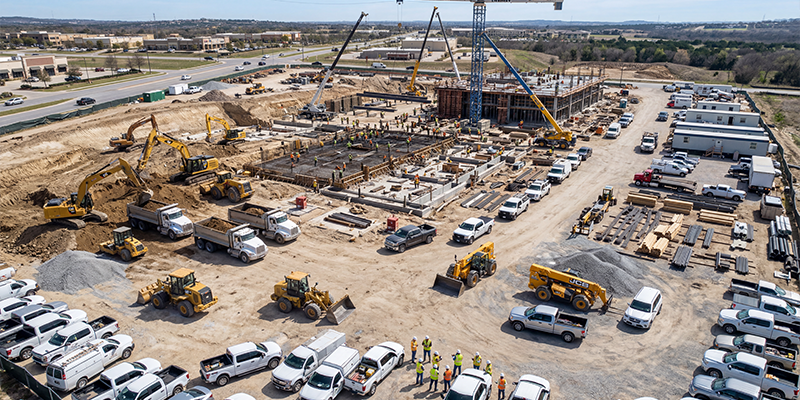
Improving Jobsite Coordination with Real-Time Fleet Visibility
Construction jobsites depend on timing. Crews, trucks, machines, trailers, materials, and supervisors all need to move in the right order. When one part of that chain is delayed, the entire workday can slow down. A crew may arrive before the right machine is available. A truck may take the wrong route. A supervisor may spend valuable time calling drivers instead of managing the site.
This is where real-time fleet visibility becomes important. Instead of relying only on calls, texts, paper logs, or end-of-day updates, managers can see where vehicles and assets are, what is moving, and which resources are available.
For construction teams, GPS fleet tracking is not just about knowing where trucks are located. It supports better scheduling, more informed dispatch decisions, stronger construction fleet management, and improved fleet efficiency across active jobsites. When combined with GPS telematics, equipment data, alerts, and reporting, fleet visibility helps contractors reduce confusion and keep work moving.
Why Jobsite Coordination Is One of the Biggest Challenges in Construction Fleet Management
Construction fleet management becomes significantly more complex when vehicles, crews, and equipment must coordinate across multiple active jobsites simultaneously.
A typical construction operation may include pickup trucks, service vehicles, trailers, loaders, excavators, generators, lifts, and other assets that move between projects. Some equipment stays on one site for weeks. Other assets move daily based on the schedule. Without strong visibility, managers often depend on field updates that may be late, incomplete, or inconsistent.
This creates common coordination problems. A crew may wait because the right machine has not arrived. A driver may be sent to a jobsite without knowing the latest access point. A piece of equipment may sit unused at one location while another crew rents a replacement because no one knows it is available.
That is why equipment tracking plays an important role in job site planning. It helps managers see asset location, availability, and movement across the fleet. When teams know what is available and where it is, they can reduce downtime, prevent double-booking, and improve fleet efficiency without adding more vehicles or machines.
How Real-Time Fleet Visibility Improves Operational Decision-Making
Real-time fleet visibility gives managers live access to vehicle, crew, and equipment location data across active jobsites. This helps dispatchers and operations teams make better decisions throughout the day, not just after reviewing reports later.
Manual communication often creates delays. A dispatcher may call several drivers to confirm the location. A superintendent may ask whether a machine has reached the site. A fleet manager may wait for updates before reassigning a truck. Each small delay adds friction to the workday.
Unlike manual check-ins, GPS fleet tracking provides continuous operational visibility throughout the day. Managers can view live location data, track estimated arrival times, and confirm whether vehicles are moving as planned. If a driver is delayed, dispatch can adjust assignments earlier. If a jobsite needs support, the closest available vehicle can be sent.
GPS telematics also provides teams with more than just location data. It can help identify idle time, movement patterns, vehicle use, and driver activity. For construction operations, that means decisions can be based on what is happening in the field rather than on what someone last reported.
Tracker Systems helps construction teams connect live fleet data to daily coordination needs, making it easier to manage vehicles, crews, and assets from a single place.
The Role of Equipment Tracking in Preventing Jobsite Delays
Equipment tracking enables construction teams to monitor equipment location, availability, and utilization in real time across multiple job sites.
This matters because equipment delays are one of the easiest ways for a project schedule to slip. If a loader, generator, lift, trailer, or compressor is not where it needs to be, crews may be forced to wait or change the work plan. In many cases, the issue is not a lack of equipment. It is a lack of visibility.
With equipment tracking, managers can confirm the location of assets before assigning work. They can see whether equipment is already on-site, in transit, idle, or assigned elsewhere. This helps teams plan jobsite transfers, avoid unnecessary rentals, and reduce time spent searching for assets.
It also supports better equipment utilization. If a machine is sitting unused for several days, fleet managers can move it to a site where it is needed. If certain assets are used heavily while others are rarely used, fleet analytics can help guide future rental, purchase, or redeployment decisions.
Equipment visibility also helps with theft prevention and maintenance planning. When managers know where assets are and how they are being used, it becomes easier to spot unusual movement, plan service work, and avoid unexpected downtime.
How Route Optimization Improves Crew Productivity and Fleet Efficiency
Construction schedules can change quickly. Weather, traffic, material-delivery windows, job-site access restrictions, and crew availability can all affect the route a driver should take. When routing decisions are made manually or based on old information, vehicles may lose time on the road.
Route optimization helps dispatchers choose better travel paths based on distance, traffic, location, and job priority. For construction teams, this can reduce travel time, improve arrival accuracy, and improve fleet efficiency throughout the day.
For example, a service truck may need to visit three job sites for repairs. Without live routing, the driver may follow the original order even if traffic changes or one site becomes less urgent. With GPS fleet tracking, dispatch can see vehicle locations and reassign routes based on current conditions.
The same applies to material runs, equipment transfers, and crew movement. If a truck is already near a jobsite that needs supplies, dispatch can send that vehicle instead of assigning someone farther away. Over time, these small decisions reduce fuel use, idle time, and wasted labor hours.
Route optimization also helps managers set realistic expectations. When field leaders can see more accurate arrival times, they can plan crew work around actual movement rather than guessing.
Tracker Systems supports route planning and live fleet visibility, enabling construction teams to respond faster when schedules change.
Using Geo-Fencing to Improve Jobsite Accountability
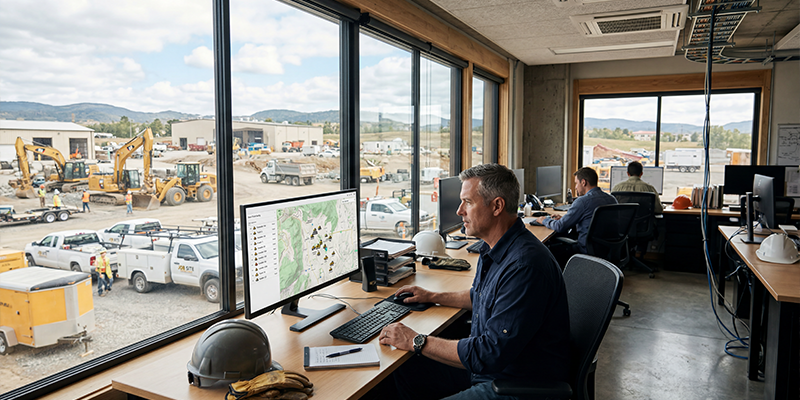
Geo-fencing creates virtual boundaries around job sites and automatically alerts fleet managers when vehicles or equipment enter or leave designated areas.
For construction teams, Geo-fencing is useful because jobsites are constantly changing. Crews come and go. Machines arrive and leave. Trucks may move between locations several times in a day. Manually tracking every movement is difficult, especially when several projects are active at once.
With job site boundaries in place, managers can receive alerts when a truck reaches a site, when equipment leaves, or when an asset moves outside an approved area. This supports time-on-site reporting, attendance validation, theft prevention, and better job-site records.
Real-time fleet visibility becomes even stronger when paired with geofencing, as teams no longer have to check dashboards for every movement constantly. The system can automatically flag important activities.
For example, if a trailer leaves a site after hours, the manager can receive an alert. If a vehicle arrives late, the entry record can confirm the actual arrival time. If equipment is moved without approval, the team can respond quickly.
Tracker Systems’ fleet visibility solutions help construction teams use job site boundaries to strengthen accountability and reduce unauthorized movement.
How Fleet Analytics Improves Long-Term Construction Planning
Live visibility helps managers make better decisions during the day. Fleet analytics help managers make better decisions over weeks, months, and project cycles.
Construction fleets often carry hidden costs. A truck may idle too often. A machine may be rented longer than needed. A trailer may be used heavily on one project but rarely on another. Without reporting, these patterns are easy to miss.
GPS telematics can show how vehicles and assets are used across the operation. Managers can review idle time, trip history, asset movement, maintenance patterns, and equipment utilization. This helps answer important planning questions.
Which vehicles are used most often? Which machines sit idle? Which job sites cause the most travel time? Are certain assets being moved too frequently? Are maintenance needs connected to heavy use or poor routing?
These answers can guide better planning. A company may decide to reposition assets, adjust dispatch rules, reduce rentals, retire underused equipment, or add capacity where demand is consistent.
For construction companies, fleet analytics are not just reports. They help turn daily field activity into planning information that can reduce waste and improve job-site coordination.
Tracker Systems’ GPS telematics platform helps connect live tracking with reporting, giving managers a clearer view of how vehicles and equipment support each project.
Best Practices for Improving Fleet Visibility Across Multiple Jobsites
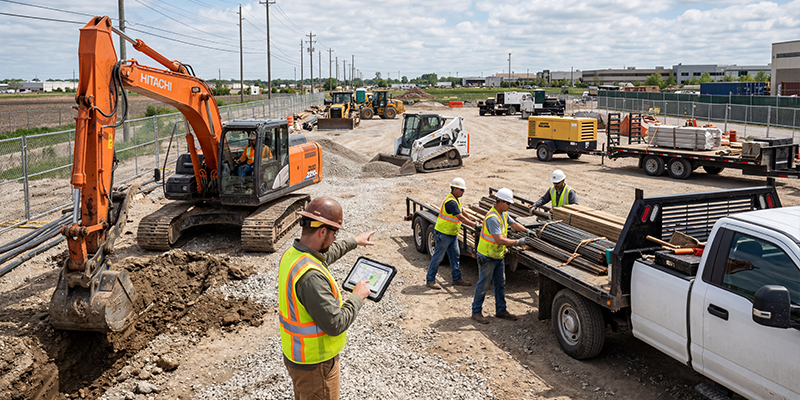
Improving real-time fleet visibility starts with consistent tracking standards. Every key vehicle, trailer, and high-value asset should be part of the same visibility process. If some assets are tracked and others are not, managers may still face blind spots.
A centralized dashboard is also important. Dispatchers, fleet managers, and operations leaders need a single place to view vehicle locations, equipment movements, alerts, and reports. This reduces confusion and avoids scattered updates across calls, texts, and spreadsheets.
Mobile access matters for field teams. Superintendents, supervisors, and managers often need visibility while they are away from the office. When they can access live fleet information from the field, they can make quicker decisions.
Alerts should also be set carefully. Teams can use alerts for job site arrivals, after-hours movement, equipment transfers, idle time, and unauthorized activity. The goal is not to create noise. The goal is to flag the movements that matter most.
Finally, reporting should be reviewed regularly. Construction fleet management improves when teams use live data alongside past activity. Daily visibility helps solve today’s problems, while reporting helps prevent them from recurring.
FAQ
1. What is real-time fleet visibility?
Real-time fleet visibility enables managers to see live vehicle, crew, and equipment location data across active job sites. It often uses GPS telematics to display movement, status, alerts, and activity in a single tracking platform.
2. How does GPS fleet tracking improve coordination on construction job sites?
GPS fleet tracking improves job-site coordination by providing managers with live location data for vehicles and assets. In construction fleet management, this helps dispatchers plan arrivals, reduce crew waiting time, confirm equipment movement, and adjust schedules when field conditions change.
3. Why is equipment tracking important on construction jobsites?
Equipment tracking is important because construction teams need to know where assets are, whether they are available, and how they are being used. Better equipment utilization helps reduce idle assets, unnecessary rentals, and delays caused by missing machines or tools.
4. What is Geo-fencing in fleet management?
Geo-fencing uses virtual boundaries to define job sites, yards, or restricted areas. When paired with GPS telematics, it can send alerts when vehicles or equipment enter or leave those areas, helping managers improve accountability and reduce unauthorized movement.
5. How does route optimization improve fleet efficiency?
Route optimization improves fleet efficiency by helping dispatchers choose better routes based on location, travel time, traffic, and job priority. This can reduce wasted travel, improve arrival timing, and help crews spend more time working instead of waiting.
6. What types of fleet analytics are useful for construction fleets?
Useful fleet analytics for construction fleet management include idle time, asset use, jobsite arrival times, route history, maintenance patterns, fuel-related activity, and equipment movement. These reports help managers plan resources and reduce waste.
7. Can GPS telematics help reduce equipment downtime?
Yes. GPS telematics can help reduce downtime by showing how equipment is used, where it is located, and when it may need service. When paired with equipment tracking, managers can plan maintenance, monitor movement, and reduce delays caused by unavailable assets.
8. How can construction companies improve fleet visibility across multiple job sites?
Construction companies can improve real-time fleet visibility by tracking key vehicles and assets, using centralized dashboards, setting live alerts, providing field teams with mobile access, and regularly reviewing reports. These steps support better coordination and stronger fleet efficiency across multiple job sites.
Recent Posts
-
How Asset Tracking Reduces Losses in Equipment Rental Businesses
Equipment rental businesses lose money in ways that are not always immediately visible. A machine ma …Jul 8th 2026 -
What Happens After a Fleet Accident? How GPS & Video Data Help Investigations
Fleet accidents can create more than vehicle damage. They can lead to driver disputes, delivery dela …Jul 1st 2026 -

Managing Mixed Fleets Vehicles, Trailers, and Equipment in One Platform
Managing a fleet is no longer just about knowing where vehicles are. Many businesses now manage serv …Jun 24th 2026